The psychedelic era’s emphasis on drugs did not mean an abandonment of sex as a theme. With some groups, this meant an emphasis on free love. Grace Slick, vocalist for the Jefferson Airplane argued that:
“It doesn’t matter what the lyrics say, or who sings them. They’re all the same. They say, ‘Be free — free in love, free in sex.” Martin Balin, another member of the Airplane, suggested that combining sex and drugs was the goal, stating that the airplane’s “Runnin’ Round This World” celebrates “the fantastic joy of making love while under LSD” (Time, June 23, 1967).
 LOS ANGELES – NOVEMBER 1: Jefferson Airplane on THE SMOTHERS BROTHERS COMEDY HOUR. From left: Paul Kantner, Jack Casady, Spencer Dryden, Grace Slick, Jorman Kaukonen and Marty Balin. Image dated November 1, 1968. (Photo by CBS via Getty Images)
Performers such as Jimi Hendrix became masters at combining the sex and drugs theme on stage: grinding on his guitar, churning out “Are You Experienced” or “Purple Haze” (Newsweek, October 9, 1967).
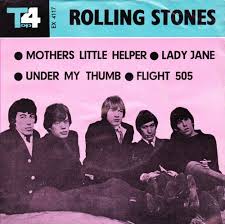
Other performers focused only on one theme in each song. The Rolling Stones, for example, seem to flit between themes of drugs (“Mother’s Little Helper”, “19th Nervous Breakdown”, “Paint it Black”) and themes of misogynistic sexuality (“Under My Thumb”, “Honky Tonk Woman”). Jim Morrison, of the Doors, characterized himself as “an erotic politician” (Szatmary, 1987, p. 122).
Overall, it is difficult to separate themes of drugs and sex in rock and roll from the society in which rock grew up. The sexual themes have survived and persisted through the invasion of other themes such as drugs. In conclusion, these themes apparent in rock’s early years were clearly derived both from rock’s lyrical roots in blues as well as from the rhythms of the music itself.
(Click on Older Posts below for all works cited)
 Sex and drugs in rock and roll music