Introduction

Welcome to my blog 🙂 Follow along for some very interesting topics that were discussed throughout the fall 2016 semester in Music, Media and Society at The New School!

I am sure most, if not all of you have heard the term “sex drugs and rock and roll” and have thought that this is a popular term used by many to portray the peace and love era when everything was… well, acceptable. But actually, drug use in music has been a topic of discussion and debate since at least the 1930s if not earlier, and the term “sex, drugs and rock and roll” didn’t always use to appear as a combination. We tend to think of these themes as a kind of representation of the Woodstock generation. Believe it or not: the association of music with using various substances dates back centuries, and goes on and on into today’s record and music video industry, constantly linking musicians with recreational drug use.

Certainly, the combination of “sex drugs and rock and roll” stands as a symbol of rebellion, of freedom, and of disenchanted youth. In analyzing this blend, social historians have essentially blamed rock and roll for drugs, blamed sex for rock and roll, and accused each of inspiring — or inciting — the other two. This blog takes a closer look at the history and the upbringing of the profane culture that was born along with rock and roll.

This slideshow requires JavaScript.

The Sexual Roots of Rock and Roll

While drugs did not appear as an explicit theme in rock and roll music until the psychedelic era of the 1960s, sex is a theme, which was clearly evident. For example, let’s take a look at the vigorous cries of Little Richard on “Long Tall Sally”, a rock and roll blues song released in 1956. You may recognize this song as a rock and roll standard covered by hundreds of artists including the Beatles and Elvis Presley. “Long Tall Sally”- Little Richard [Link to Song]

~Vocals start at about 15s. ***The line in the original recorded version, “Long Tall Sally is built for speed”, is a reference to the proverbial African-American distinction in sexual types: “Built for comfort” or “built for speed”. PS: The top comment when you research this song on youtube is “This’ll turn ya into a sexual TYRANNOSAURUS!” little-richard-long-tall-sally-big

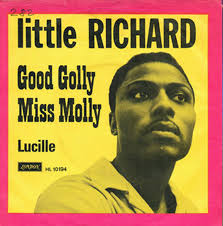
“Good Golly Miss Molly”

unknown-1

“Good Golly Miss Molly” – Little Richard (1958) [Link to song]

Songfacts.com explains that:

“Like most of Little Richard’s songs, this contains a lot of innuendo (“sure like to ball”) but most people were too busy listening to the music to notice or didn’t get the reference. At the time, the most common meaning for “balling” was dancing, it only later became a popular euphemism for oral sex. The term later took on a new meaning when it came describe a lavish and extravagant lifestyle, with these guys flashing their cash known as “ballers.”


Jerry Lee Lewis

“Whole Lotta Shakin’ Goin’ On” – Jerry Lee Lewis [Link to Song]

Jerry Lee Lewis’s 1957 raucous cover titled “Whole Lotta Shakin’ Goin’ On” written by Dave Curlee Williams is interpreted by songfacts.com as:

“[…]too suggestive, he cursed on it, he sounded black (most stations didn’t play songs by black artists). Still, the song sold well in the southern United States, but it wasn’t until Lewis’ TV debut on The Steve Allen Show on July 28, 1957 that it became a national hit and sold over 6 million copies. The song also generated a lot of controversy, as the lyrics were rather lascivious and quite shocking coming from a singer from the Bible Belt.”

Another significantly famous Jerry Lee Lewis song that insinuates sexuality is the classic “Great Balls of Fire”, 1957. “Great Balls of Fire” – Jerry Lee Lewis [Link to Song]

Greg Prato of Rolling Stone magazine suggests that:

“Despite the fact that “Great Balls of Fire” is now considered one of rock ‘n’ roll’s early landmark tunes, Jerry Lee Lewis was spooked by the song when it came time to record it. “At one of these sessions, everyone in the studio got to drinking,” Lewis biographer Nick Tosches explained. “Jerry Lee became filled with the Holy Ghost, and he decided that the song ‘Great Balls of Fire’ was of the devil and that to sing it was to sin” (Prato, 2012).

Next up is the one and only, Elvis Presley…

His raunchy 1956 song “Hound Dog” (originally recorded in a blues style by Big Mama Thornton in 1953) was co-written by Jerry Leiber and Mike Stoller. Songfacts reveals that:

“When the line “You ain’t nothin’ but a hound dog” popped into Jerry Leiber’s head, he considered “hound dog” a placeholder phrase. “I wanted something that was a lot more insinuating,” he said in More Songwriters on Songwriting. “I wanted something that was sexy.”

“Hound Dog” – Elvis Presley [Link to Song]

elvis_presley-hound_dog_s_1

**************

We then hear the same recurrent themes in the Rolling Stones’ 1967 “Let’s Spend the Night Together”.

“Let’s Spend The Night Together” – Rolling Stones [Link to Song]

Research shows that this song was fairly controversial in the US due it’s mild sexual suggestions. Sex was and is somehow bad in a country where a large portion of the population believes that Jesus is retuning to Earth in their lifetime. In fact, The Stones were forced to change the lyrics to “Let’s Spend Some Time Together” when they performed on Ed Sullivan’s Show.

the_rolling_stones-lets_spend_the_night_together_s_10

Plastic Fantastic Lover

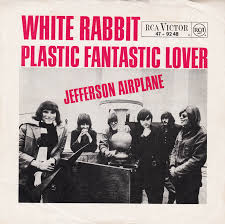
The final illustration of sexual themes in early rock and roll music that I will reference is Jefferson Airplane’s “Plastic Fantastic Lover”, written by Marty Balin in 1967. Now with a song title like that, what images come to your mind?

“Plastic Fantastic Lover” – Jefferson Airplane [Link to Song]

Unknown.jpeg

This song isn’t about what you think it is (OK, I’ll say it – a sex toy). It was written by Marty Balin as an ode to his new stereo system, which was a novelty item at the time. News reporter Matthew Gilbert of the Boston Globe announces:

“Marty Balin’s lyrics are a bit purple — “The electrical dust is starting to rust / Her trapezoid thermometer taste” — but that’s what you want in a 1960s psychedelic take on TV as a soul-sucking partner. Some speculate that “Plastic Fantastic Lover” is about a stereo system, or a sex toy; and those valid interpretations add to the meanings and scope of the song” (Gilbert, 2012).


Which inspired which?

Whether sex inspired rock and roll or whether rock and roll invoked themes of sexuality, there is little doubt that the two concepts were closely linked from rock’s beginnings.

Early rock and roll developed out of black rhythm and blues music, a genre which devoted its lyrics almost exclusively to stories of loves lost, loves almost had, or love twisted out of proportion. Rock and roll quickened the pace and turned up the volume of rhythm and blues, both literally and metaphorically so that love became sex. In class, we read Stephen King’s “Reggae Rastafari and the rhetoric of social control”. Though most of the reading was intended to chronicle Reggae and Jamaican popular music, similar themes are discussed by King, such as national identity, social change, technology and most relevant to my research of sex drugs and rock and roll, the use of erotic references in lyrics sung by Black artists, which provides us with the theory that they were demanding change. King writes:

“The urgency of Rock and Roll transformed rhythm and blues into a more emotional, grittier, stripped down music” (King, 35).

The Jamaican term “rude boy” that we learned, was popular during the same rock and roll era of the 1960’s. Rude boys were sexualized and regarded as violent, and are still erotically referenced today for example in Rihanna’s music, especially her song “Rude Boy” that I analyzed in one of my weekly assignments earlier in the semester. The reactions to Rocksteady music involved many noticing the people’s aggression. Where did this come from? Reggae and the styles preceding it, like rock and roll, were greatly shaped by both social change and technology.
300x300

David Szatmary states in his “Social Theory of Rock and Roll” that even the term “rock and roll” derived from sex. He notes that it was:

“[…]originally a black euphemism for sexual intercourse” (Szatmary, 1987, p. 15).

Whether or not Szatmary is correct in his assertion, there is little doubt that the heavy, simple, steady beat of rock and roll evokes a sexual rhythm. Early opponents of rock and roll were quick to pick up on this fact and used it as a basis for attack. For example, a 1956 Birmingham, Alabama concert given by Nat King Cole was disrupted by a delegation from the neo-fascist White Citizens Council. The leader of the group (who was apparently oblivious to the fact that Cole did not sing rock and roll) jumped on stage and warned of a N.A.A.C.P. plot to “mongrelize America” through the new form of music:

“Rock ‘n’ roll is the basic, heavy-beat music of the Negroes. It appeals to the base in man, brings out animalism and vulgarity.” (Larner, 1964, p. 44) (in “What do they get from Rock and Roll?)

Riftides article about the attack on Nat King Cole

Consciousness of the sexuality of the music — both by the performer and by the audience — remained a major factor in rock and roll through its early years. Blatant sexual themes appeared to be more acceptable when they came from black singers. Little Richard’s “Long Tall Sally,” along with “The Girl Can’t Help It”, “Slippin’ and Slidin'” and “Good Golly Miss Molly” were full of innuendos, yet still received plenty of air play. On the other hand, Jerry Lee Lewis’s 1957 song, “Whole Lotta Shakin’ Goin’ On” was banned on radio stations across the country for its sexual overtones (Szatmary, 1987, p. 37). That same year the Everyly Brothers’ “Wake Up Little Susie” was banned from the airwaves in Boston for its “suggestiveness”.

During the early 1960s, as rock and roll made its way onto television, rock’s sexual roots were reinforced visually by the twirls of the singer. Elvis Presley, who finally gained national dishonor with his television appearance on the Ed Sullivan Show (which elected to film Elvis from the waist up only) became the focal point for a great deal of anti-rock moralism. The New York Times reported that:

Presley’s “one specialty is an accented movement of the body that therefore has been primarily identified with the repertoire of the blonde bombshells of the burlesque runway” and Time flatly called Presley a “sexibitionist” (Szatmary, 1987, p. 46).

Larner’s (1964) analysis of rock and roll suggested that sensuality was an integral part of the rock rhythm and that rock, in turn, had developed out of a sensual need:

“There is a general need for rock ‘n’ roll, a need rooted in strong feelings… When the listener submits himself to the beat, he loosens his mind from its moorings in space and time; no longer does he feel a separation between himself and his surroundings. The difficult world of external objects is blurred and unreal; only the inner pulse is real, the beat its outer protection.” (Larner, 1964, p. 45).

Bringing Drugs into Play… Expanding the Mind

If, as Larner asserts, rock and roll music naturally allowed the listener to “loosen his mind”, then the blending of sex, drugs and rock and roll in the 1960s can be seen as a natural transition in the evolution of this music genre. The theme of drugs (particularly alcohol and heroin) had always been an nuance in rock’s ancestor — rhythm and blues. In the 1960s with the initiation of the psychedelic era, the drug theme in rock and roll came out of the closet. Even the names of the groups in the mid-1960s evoked drug themes: The Doors, the Jefferson Airplane, the Loading Zone, the Weeds, the Seeds, the Grateful Dead, Canned Heat, Sly and the Family Stone, the Magic Mushrooms and the Zombies.

If the group names were evocative, the songs were more so. Sometimes the song title alone was enough to tell the story: The Byrds’ “Eight Miles High”, the Fugs’ “Marijuana” and “I couldn’t Get High”, Jimi Hendricks’ “Purple Haze” and “stone free”. Most recently, Jean taught in our lecture about Jimi Hendrix that Hendrix controlled his music as Rock developed, as a means of presenting ownership and rank, in an era that unfortunately was unequal and unfair, from the early 1940s till the mid to late 1960’s. The radio charts back then were evidence of white supremacy. In Steve Waksman’s article “Black Sound, Black Body: Jimi Hendrix, The Electric Guitar, and the meanings of Blackness”, he notes that:

His song “Electric Lady was Hendrix’s effort to move his control over sound one step further, to actually own the means of muscical (re)production. It was also his attempt to create a “total environment” in which physical design and visual appearance fused into the overarching purpose of making music” (Waksman, 75).

He was known to be sexual with his performance, referencing all types of sensual behavior. Also, “purple haze” in the drug world, is actually a strain of marijuana.

Waksman continues to define Hendrix as unique:

“Through the medium of the electric guitar, Hendrix was able to transcend human potential in both musical and sexual terms; the dimension of exaggerated phallic display was complemented by the array of new sonic possibilities offered by the instrument, possibilities he deployed with aggressive creativity. Hendrix’s achievement therefore rested upon a combination of talent and technology in which the electric guitar allowed him to construct a superhuman persona founded upon the display of musical and sexual mastery” (Waksman, 93).

“Purple Haze” – Jimi Hendrix [live]

The Anthem of Drugs in the Rock Era

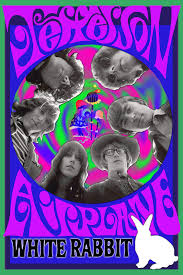
Arguably the anthem of the drugs and rock era was The Jefferson Airplane’s “White Rabbit”: Lyrics include:

“One pill makes you larger and one pill makes you small/And the ones that mother gives you don’t do anything at all/Go ask Alice, when she’s ten feet tall/When the men on the chess board get up and tell you where to go/You just had some kind of mushroom and your mind is moving low” (Szatmary, 1987, p. 122)

The song ends with an entreaty to “FEED YOUR HEAD, FEED YOUR HEAD.” https://www.youtube.com/watch?v=XR8LFNUr3vw


unknown-2


Concluding the Psychedelic Era

The psychedelic era’s emphasis on drugs did not mean an abandonment of sex as a theme. With some groups, this meant an emphasis on free love. Grace Slick, vocalist for the Jefferson Airplane argued that:

“It doesn’t matter what the lyrics say, or who sings them. They’re all the same. They say, ‘Be free — free in love, free in sex.” Martin Balin, another member of the Airplane, suggested that combining sex and drugs was the goal, stating that the airplane’s “Runnin’ Round This World” celebrates “the fantastic joy of making love while under LSD” (Time, June 23, 1967). 

Performers such as Jimi Hendrix became masters at combining the sex and drugs theme on stage: grinding on his guitar, churning out “Are You Experienced” or “Purple Haze” (Newsweek, October 9, 1967).

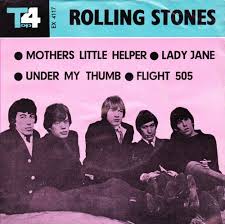
Other performers focused only on one theme in each song. The Rolling Stones, for example, seem to flit between themes of drugs (“Mother’s Little Helper”, “19th Nervous Breakdown”, “Paint it Black”) and themes of misogynistic sexuality (“Under My Thumb”, “Honky Tonk Woman”). Jim Morrison, of the Doors, characterized himself as “an erotic politician” (Szatmary, 1987, p. 122).

unknown-3


     Overall, it is difficult to separate themes of drugs and sex in rock and roll from the society in which rock grew up. The sexual themes have survived and persisted through the invasion of other themes such as drugs. In conclusion, these themes apparent in rock’s early years were clearly derived both from rock’s lyrical roots in blues as well as from the rhythms of the music itself.

(Click on Older Posts below for all works cited)